
Hyundai Model-Year Parts Guide
Older Hyundai vehicles can stay reliable and cost-effective when replacement parts are matched carefully by model year, trim, engine, and system. For daily drivers and DIY owners, OEM Hyundai parts help protect fitment, support warranty-safe repairs, and reduce the risk of buying parts that look similar but do not install or work correctly.
Older Hyundai parts are not always interchangeable
Hyundai parts can change between generations, trims, engines, and production details. A brake line, ignition component, or emissions control unit may look close to the original part but use different routing, connectors, mounting points, or calibration needs.
This matters most on older Hyundai models because previous repairs, corrosion, wear, and discontinued configurations can make parts ordering more difficult. Choosing by appearance alone can lead to returns, repair delays, warning lights, or a repair that does not solve the original issue.
Why exact fitment helps protect your budget and your Hyundai
For budget-conscious Hyundai owners, the lowest upfront price is not always the best value. A mismatched part can add extra labor, create repeat repairs, or cause avoidable downtime. OEM parts are designed around Hyundai fitment requirements, which helps keep repairs straightforward and warranty-safe when installed correctly.
Before ordering, confirm the model year, model, trim, engine, and any visible part number on the existing component. This simple check supports long-term reliability and helps keep everyday transportation dependable.
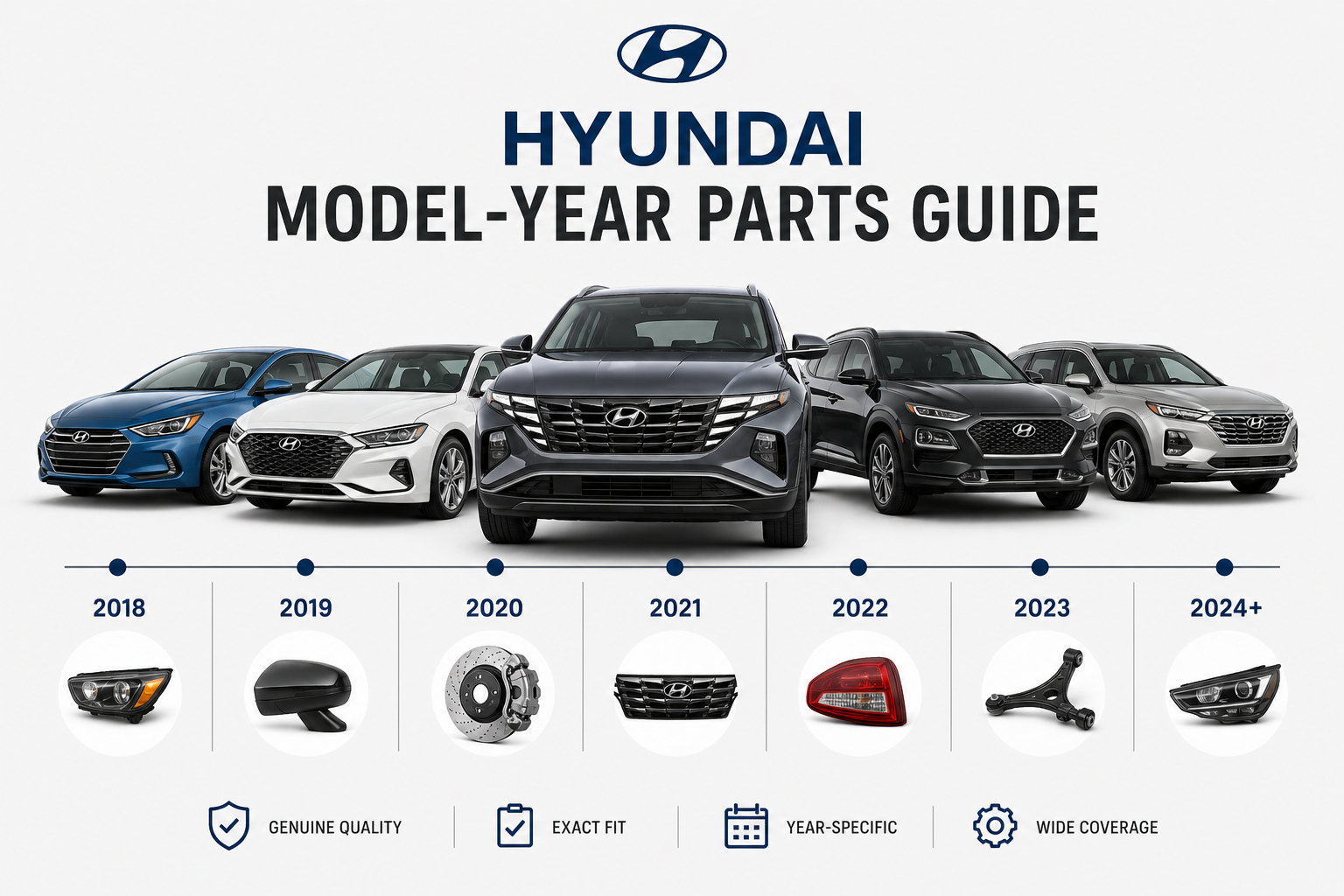
Step-by-step: How to shop for older Hyundai parts by model year
- Confirm the vehicle details. Start with the Hyundai model year, model, trim, engine, and drivetrain when applicable.
- Check the existing part. Look for a stamped part number, connector shape, routing, bracket style, or other visible details before removal.
- Start with model-year pages. Owners working on early vehicles can review 1990 Hyundai parts, 1991 Hyundai parts, or 1992 Hyundai parts to narrow the search.
- Compare later-year maintenance needs. For newer aging vehicles, check 2000 Hyundai parts, 2009 Hyundai parts, 2011 Hyundai parts, and 2014 Hyundai parts.
- Prioritize safety first. Address braking, steering, lighting, tires, and other safety-related concerns before comfort or cosmetic repairs.
- Match electronic parts carefully. Emissions modules and control units should be selected with exact compatibility in mind, not guessed by name alone.
Recommended OEM parts for common older Hyundai repairs
Brake lines: Aging brake lines can corrode, weaken, or leak, especially in areas with moisture, road salt, or seasonal weather changes. Soft pedal feel, visible brake fluid, pulling while braking, or a brake warning light should be inspected quickly. When servicing the system, check Hyundai brake lines for the correct routing, fittings, and fitment.
Trailer brake components: If your Hyundai is used with towing or utility setups where applicable, review Hyundai trailer brakes. Added load can change stopping demands, so inspection and fitment checks are important.
Ignition caps, rotors, and contacts: Older ignition parts can contribute to hard starts, rough idle, weak acceleration, misfires, or inconsistent running. Components such as Hyundai caps, rotors, and contacts should be matched by year and engine for smoother everyday drivability.
Emission modules and control units: Electronic and emissions-related parts need exact compatibility. The wrong module may not communicate correctly with the vehicle and can cause warning lights, drivability concerns, or inspection readiness issues. Before ordering Hyundai emission modules and control units, compare vehicle details and existing part information when available.
Model-Year Research
Model-year pages help narrow your search before you compare specific systems. Brake, ignition, and emissions categories are especially useful for older Hyundai maintenance because these systems affect safety, starting, drivability, inspection readiness, and long-term ownership costs. Using Hyundai-specific OEM categories helps reduce ordering mistakes and keeps the repair focused on parts designed for the vehicle.
Frequently Asked Questions
How do I find parts for an older Hyundai?
Start with the vehicle year, model, trim, and engine. Then use Hyundai model-year pages to narrow the search before verifying exact fitment and comparing any existing part numbers.
Are OEM Hyundai parts worth it for an older vehicle?
Yes, especially when fitment, warranty-safe repairs, and long-term dependability matter. OEM parts can help reduce guesswork and lower the chance of repeat repairs caused by poor compatibility.
Are Hyundai brake lines model-specific?
Yes. Brake line routing, length, fittings, and placement can vary by model and year, so fitment confirmation is important before ordering.
Do older Hyundai ignition parts wear out?
Yes. Caps, rotors, contacts, and related ignition components can wear with age and mileage, causing hard starts, misfires, rough idle, or weak acceleration.
Can the wrong emissions module cause problems?
Yes. An incorrect emissions module or control unit may not communicate correctly with the vehicle, which can lead to warning lights, drivability issues, or inspection problems.